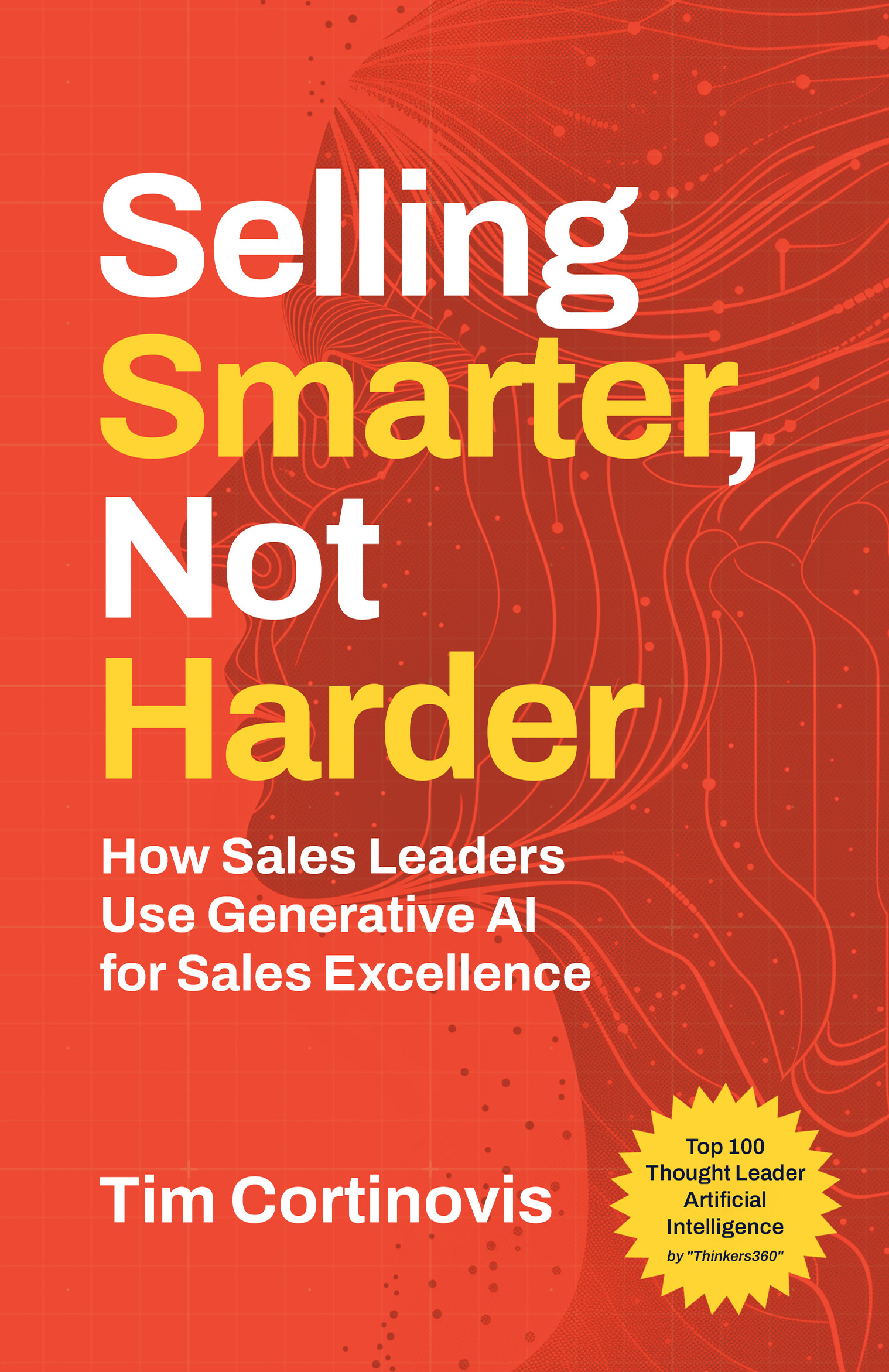
The Sales Accelerator Newsletter
Weekly Edition | January 30, 2026
Editorial: Why This Week’s AI News Matters for Sales Leaders
This week marked a critical inflection point for sales professionals: the transition from AI experimentation to systematic execution. The industry is no longer asking whether AI should be deployed in sales workflows—it’s now focused on how to orchestrate AI agents across entire revenue operations at scale.
Three dominant themes emerged that directly impact your bottom line: (1) Agentic AI is moving from pilot projects to mainstream adoption, with companies reporting measurable improvements in lead response times, qualification accuracy, and forecast reliability; (2) Payment and commerce workflows are being fundamentally restructured by AI agents that make purchase decisions on behalf of customers; and (3) Retention and revenue management are shifting from reactive to predictive, using AI to detect buyer signals and intent before they become visible in traditional metrics.
For sales teams, this means that competitive advantage in 2026 will belong to organizations that treat AI agents not as a marketing feature, but as operational infrastructure—connecting lead generation, qualification, engagement, and forecasting into a unified system. The data is clear: teams deploying AI systematically across these functions are reporting 40% improvements in win rates, 25% faster sales cycles, and substantially higher forecast accuracy.
The window for “getting started with AI” has closed. The window for leading with AI has opened.
This Week’s Top Stories
1. CES 2026 Signals Executive Consensus: Agentic AI Moves from Hype to Operational Reality
The Current
Marketing executives at CES 2026 confirmed that agentic AI has transitioned from experimental to practical. Rather than discussing theoretical capabilities, leaders focused on how AI agents will actually execute media buying, optimize retail budgets, and automate complex decision-making. Key insight: transparency in AI-driven automation is emerging as a competitive differentiator—platforms that can explain why an agent made a decision are winning trust faster than black-box solutions.
Why it matters: Enterprise buyers expect AI agents embedded in their existing tech stacks, not as standalone experimental tools. Sales teams should prepare for conversations about governance, auditability, and integration depth.
2. Agentic AI Fundamentally Restructures Sales Workflows Through Autonomous Decision-Making
Workato
AI sales agents are evolving beyond automation into autonomous operators. Unlike traditional workflow tools that follow static rules, modern AI agents interpret context from emails, CRM records, and buyer behavior to decide what action to take next—and execute it across multiple systems simultaneously. Organizations deploying these agents are seeing lead response times improve by 70% and sales-rep productivity increase by 8-12 hours per week.
Why it matters: This isn’t optimization—this is operational transformation. AI agents can now handle the complex, multi-step workflows that consume your reps’ non-selling time.
3. AI Agents Are Becoming the Primary Interface for Commerce and Discovery
Ad Exchanger
AI agents are reshaping how consumers search, discover, and purchase products. Startups like Limy are now helping brands understand which prompts drive conversions when users interact with AI agents like ChatGPT. This represents a fundamental shift: instead of optimizing for search engine algorithms or social feeds, marketers must now optimize for AI agent decision-making.
Why it matters: Lead generation workflows will need to be redesigned around agent behavior, not human behavior. Your messaging, positioning, and content structure must be legible to AI systems that will evaluate your offering against competitors in nanoseconds.
4. Google’s Three AI Strategies Establish Blueprint for 2026 Marketing Automation
TechBuzz
Google outlined three core AI-powered strategies for 2026: (1) Max for Search automates keyword expansion and audience discovery; (2) Demand Gen bridges social engagement with search intent; and (3) automated campaign optimization shifts manual tuning to continuous, data-driven adjustments. The underlying thesis: AI removes the manual grunt work so teams can focus on strategy.
Why it matters: These aren’t optional features—they’re becoming industry baselines. Sales enablement teams should expect marketing counterparts to deliver increasingly refined audience segments and intent signals powered by these tools.
5. IAB Projects 9.5% U.S. Ad Spend Growth Driven by Agentic AI Adoption and Execution
PR Newswire
The IAB’s 2026 outlook reveals that five of the six top marketer focus areas are now AI-driven, with two-thirds of advertisers prioritizing agentic AI for ad buying and campaign execution. Cross-platform measurement is rising to 72% (up from 64%), reflecting the need to connect AI-orchestrated campaigns with measurable outcomes.
Why it matters: Budget is flowing toward AI-driven execution, not toward human-managed campaigns. Sales teams competing for marketing budget must demonstrate how they integrate with these automated systems, not operate independently from them.
6. Voice AI Is Delivering Measurable ROI in Sales Through Real-Time Agent Engagement
Pete Gabi
Voice AI agents are closing the gap between inbound inquiries and qualified meetings. Real-world pilots show voice AI connecting with prospects 12 times more effectively than email, with qualification rates jumping from 30% to 85% on answered calls. One legal services firm doubled its monthly closed deals after implementing voice AI for outbound qualification.
Why it matters: This is no longer about efficiency metrics—this is about revenue impact. Voice AI is proving that AI-driven engagement can actually improve conversion rates, not just reduce costs.
7. Agentic Commerce and Payment Personalization Redefine How Revenue Teams Must Operate
Payments Dive
AI agents will soon make purchase decisions on behalf of customers, including selecting payment methods based on reward optimization, available funds, and loyalty program integration. Payment companies are now competing for position in “agent-recommended” payment options the same way merchants compete in search results.
Why it matters: Sales and commerce workflows are converging into agent-mediated transactions. Your pricing, terms, and payment options must be optimized for AI agent decision-making, not just human preferences.
8. Intelligent Retention Through Real-Time Behavioral AI Is Becoming the Margin Differentiator
NITI AI
Companies deploying behavioral AI for retention are achieving 40% churn reduction while increasing margins by 25%. Rather than broadcasting generic retention offers, intelligent systems identify micro-moments when customers are most receptive and deliver personalized interventions. One key shift: moving from calendar-based campaigns to signal-triggered engagement.
Why it matters: Acquisition costs are rising; retention profitability is accelerating. Sales and customer success teams must coordinate around real-time behavioral signals to prevent churn before it becomes visible in lagging metrics.
9. Predictive Lead Scoring and AI-Driven Qualification Are Fundamentally Restructuring Sales Pipeline Architecture
Markets and Markets
AI sales forecasting is achieving 90-95% accuracy compared to 60-70% with traditional methods. Organizations deploying predictive lead scoring and AI-driven qualification are reporting 15-20% higher forecast accuracy and 25% shorter sales cycles. The shift is moving from subjective rep estimates to objective pattern recognition across hundreds of data points.
Why it matters: Sales leadership now has the opportunity to operate from predictive intelligence rather than historical stage-based assumptions. Pipeline visibility improves dramatically, enabling proactive management instead of reactive forecasting.
10. Multi-Touch Attribution Is Evolving into an Operating System for Revenue Decision-Making
RevSure
Multi-touch attribution is no longer just a reporting layer—it’s becoming the operational infrastructure for revenue teams. Organizations treating MTA as a system (combining data, models, classifications, and spend) are making faster, more accurate budget allocation decisions. The key shift: moving from “which channel gets credit” to “which channel sequences drive revenue.”
Why it matters: Sales and marketing alignment depends on shared visibility into what actually drives pipeline and revenue. Teams that implement MTA as operational infrastructure see 30-40% improvements in forecast accuracy and faster pipeline velocity.
Key Takeaways for Sales Leaders
- Agentic AI is no longer experimental—it’s now operational infrastructure. Expect it in your tech stack and budget accordingly.
- Lead qualification is becoming predictive and real-time, not reactive and manual. Invest in platforms that surface intent signals and automate routing.
- Revenue metrics are shifting from activity-based to outcome-based, measured through forecast accuracy, cycle time, and win-rate improvements.
- Retention is now a sales motion, not just a customer success function. Behavioral signals must trigger sales engagement before churn accelerates.
- Attribution and pipeline visibility are merging into unified decision-making systems. Siloed metrics no longer work.
Stay ahead of these shifts. Your 2026 competitive advantage depends on it.
Happy innovating,
The Sales Accelerator Editorial Team