The Agentic Revenue Brief
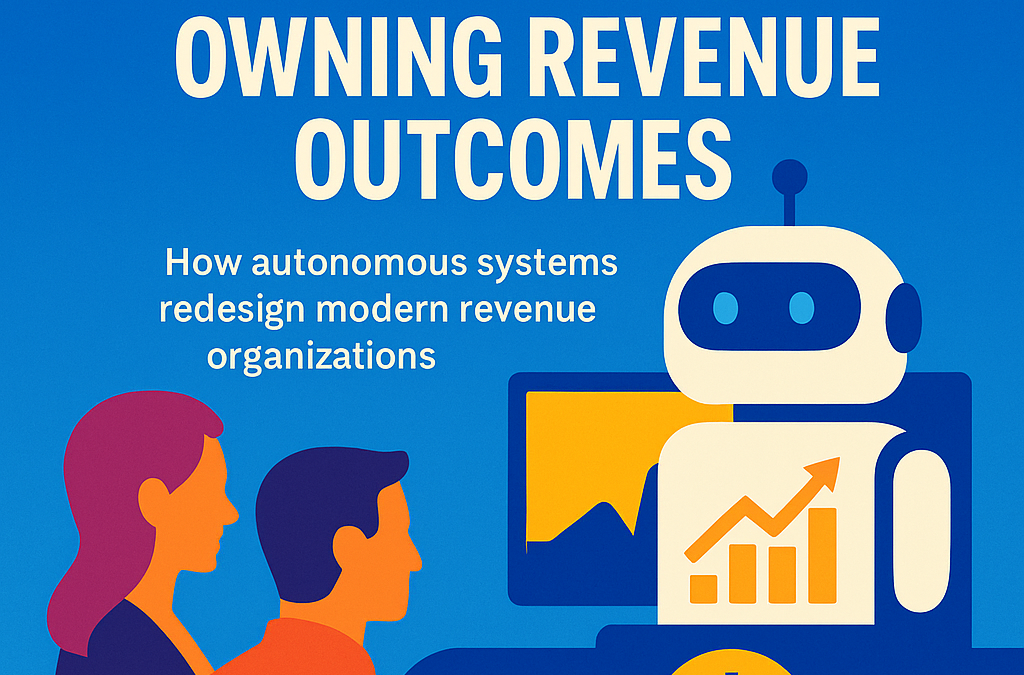
How autonomous systems redesign modern revenue organizations.
When Agents Start Owning Revenue Outcomes
If you have just 1 minute
Revenue teams are moving from “software that supports people” to systems that execute revenue work—with humans shifting from operators to governors. The structural change isn’t that AI can write emails or score leads. It’s that agentic systems are beginning to decide, sequence, and complete multi-step revenue motions across marketing, sales, and customer workflows, using feedback loops that look increasingly like management.
This matters now because the competitive advantage is migrating from tool adoption to control of autonomous execution: who gets to define objectives, allocate budget attention, and set boundaries on what the system can do. Leaders who should pay attention: CROs, RevOps, and CMOs who own the operating model—not the tech stack. The failure mode is predictable: bolting agents onto a tool-centric GTM while your competitors redesign the system that produces pipeline.
This week’s developments you should not miss
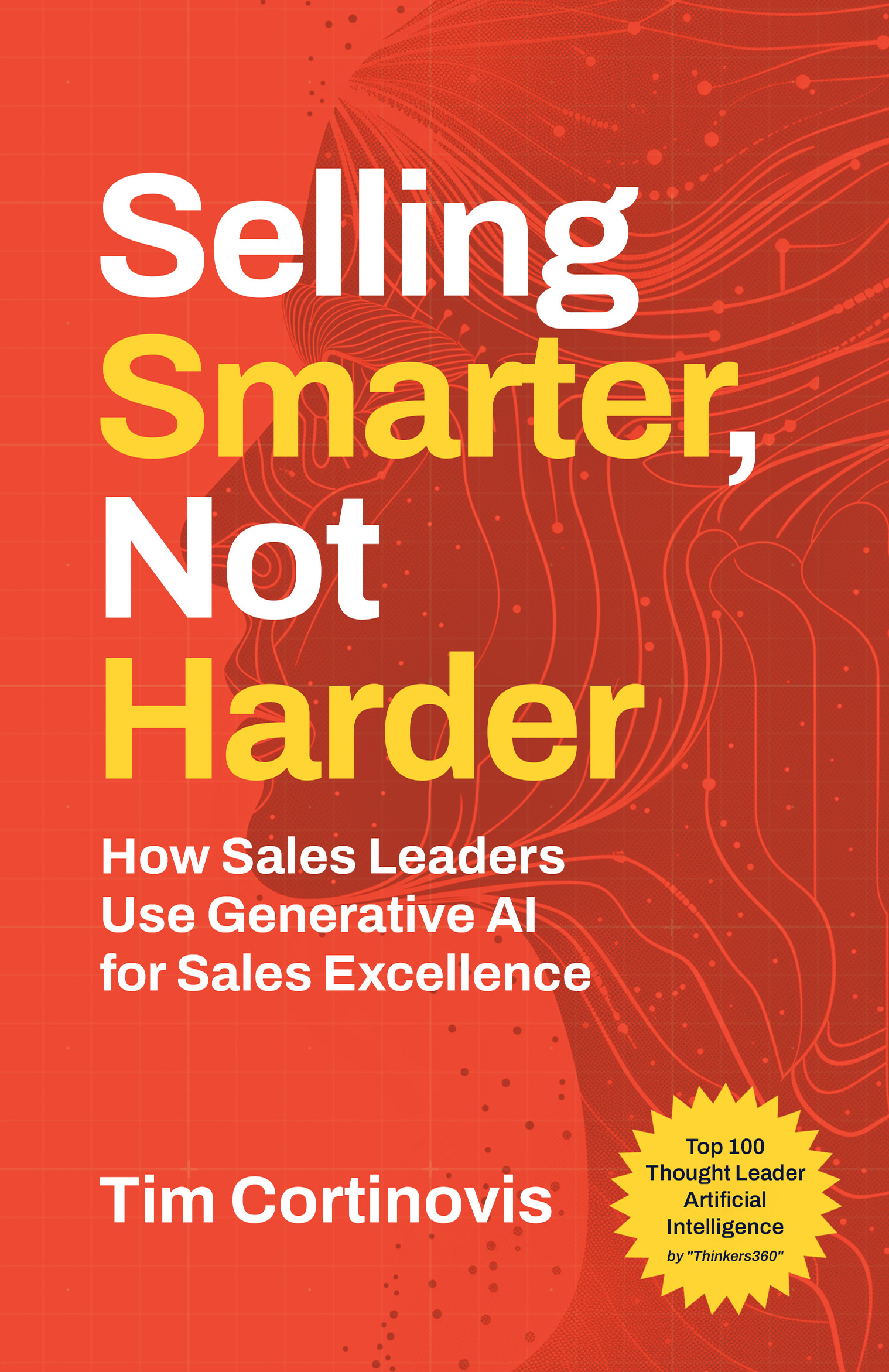
Finally! My new book “Agentic Revenue Systems: How Autonomous Execution Redesigns the Modern Revenue Organization” will be published on April 15 as an ebook and in a paperback version. The ebook is available for pre-order right now.
“A category-creating bridge between Revenue Architecture, RevOps, and Agentic AI leadership.” Agentic Revenue Systems is a strategic playbook for revenue leaders entering the next era of growth. For years, B2B revenue organizations have relied on human coordination to keep the machine running: top reps rescuing deals, managers patching forecasts, and teams working around fragmented systems. That model is reaching its limit. In this book, Tim Cortinovis argues that the real shift is not from sales to AI tools. It is from manual coordination to governed autonomous execution. This is not a book about hype, hacks, or bolting a chatbot onto your CRM.
Brand becomes a gating factor for agent-led demand
What happened
A core theme emerging in mainstream coverage: as agents intermediate buyer discovery and vendor selection, companies risk becoming “invisible” if they aren’t legible to machine-led research and recommendation flows.
Why it matters structurally
Revenue visibility is shifting from “share of mind” to share of machine-readable credibility. This is a structural redefinition of demand creation: your brand is no longer only a story told to humans; it’s an input to autonomous selection systems—ranking, retrieval, comparison, and shortlisting logic.
How this shifts revenue workflows
Marketing and RevOps start to converge around identity, provenance, and evidence: verified claims, consistent product taxonomy, authoritative third-party references, and structured content that agents can parse. Pipeline creation becomes partially contingent on how well your data and messaging survive automated evaluation.
Who gains leverage
Teams that own “commercial truth” end-to-end: product marketing + enablement + RevOps. Firms with disciplined customer proof systems (case data, outcomes, benchmarks) become more discoverable and defensible.
Who becomes exposed
Companies relying on human-only persuasion, vague positioning, or fragmented web/content ecosystems. Also exposed: revenue orgs that treat brand as creative output rather than a machine-interpretable asset.
Marketing agents are moving from content production to orchestration
What happened
The marketing landscape continues to fill with agent-driven capabilities: planning, sequencing, audience operations, experimentation loops, and cross-channel execution—less “write a thing,” more “run the system.”
Why it matters structurally
Marketing operations is becoming a control plane for autonomous labor. The shift is from campaign management to policy management: guardrails, budgets, intent definitions, and success criteria. This repositions marketing leadership from creators of programs to designers of autonomous throughput.
How this shifts revenue workflows
You should expect a redesign of the MQL/SQL assembly line. As agents run experiments continuously, handoffs become less batch-oriented and more state-based: an account or persona transitions when signals reach thresholds, not when a human “routes” it. The interface between marketing and SDR changes from lead lists to agent-generated account narratives with recommended next actions and evidence trails.
Who gains leverage
CMOs with strong analytics and governance muscle. RevOps teams that can standardize events, definitions, and attribution logic will become central rather than supportive.
Who becomes exposed
Demand gen orgs optimized for manual campaign cycles, and sales teams that depend on marketing volume rather than marketing precision. Also exposed: any org where lifecycle stages are political instead of measurable.
Agentic systems are being framed as operating model change, not feature adoption
What happened
Roundups are increasingly bundling agentic capabilities into a single conclusion: this is a step-change in how work gets executed—especially where systems can observe, decide, and act across tools.
Why it matters structurally
Enterprises are nearing a tipping point where “AI initiatives” stop being innovation theater and become org design decisions. Once systems can execute multi-step commercial work, the question becomes: who is accountable for outcomes produced by semi-autonomous processes?
How this shifts revenue workflows
Forecasting and pipeline inspection move from static snapshots to continuous diagnostics. Agents can monitor deal momentum, detect stall patterns, generate remediation plays, and execute micro-actions (follow-ups, content sends, internal escalations). The workflow redesign is that humans stop pushing every deal forward; they start intervening when the system flags risk or high-leverage opportunities.
Who gains leverage
Revenue leaders who can define decision rights: what agents can do without approval, what requires human sign-off, and what is prohibited. Organizations with clean CRM hygiene and consistent process definitions will compound faster.
Who becomes exposed
Teams whose “process” lives in tribal knowledge. If your GTM only works because a few veterans remember the exceptions, agents will amplify inconsistency, not performance.
Commerce agents highlight the next GTM battleground: autonomous buying
What happened
Ecommerce-focused reporting underscores how agents are taking on buyer-side tasks: search, evaluation, bundling, negotiation mechanics, and repeat purchasing.
Why it matters structurally
B2B revenue orgs should treat this as a preview: more buying motions will become agent-mediated. That means persuasion gives way to verification; differentiation shifts from claims to provable outcomes and frictionless fulfillment.
How this shifts revenue workflows
Sales cycles compress in predictable categories where requirements are stable. Growth shifts to teams that can package offers into machine-evaluable units: clear pricing logic, integration requirements, security posture, implementation timelines, and outcome guarantees.
Who gains leverage
Companies with strong commercial operations and productized offers. Legal/security teams that can standardize approvals become growth enablers rather than blockers.
Who becomes exposed
Organizations dependent on ambiguity (custom pricing without rationale, unclear packaging, inconsistent implementation). Agent buyers punish fuzziness.
The agent ecosystem is fragmenting—driving a governance premium
What happened
The pace and variety of agent releases continues to accelerate, with a growing ecosystem of specialized agents and agent “stores.”
Why it matters structurally
Fragmentation increases the likelihood of “shadow autonomy.” When teams can deploy semi-autonomous agents without central oversight, you get inconsistent policy enforcement, data leakage risk, and conflicting actions across accounts.
How this shifts revenue workflows
RevOps will be forced to evolve from systems administration to autonomy governance: identity and permissions, audit trails, approved actions, data boundaries, and standardized prompts/policies that reflect GTM strategy. Tool sprawl becomes autonomy sprawl if not contained.
Who gains leverage
Operators who can establish a single execution layer: governed agent frameworks, shared memory standards, unified customer/account models, and outcome instrumentation.
Who becomes exposed
Any revenue org allowing each function to deploy its own agents. The near-term symptom will be inconsistent outreach, conflicting pricing/positioning, and account confusion—followed by compliance incidents.
What This Means for Revenue Design
Org charts will tilt toward “systems leadership.” Expect new seats of power: Head of Agentic Ops, Commercial Systems Architect, or RevOps leaders with explicit mandate over autonomous execution. The traditional split—Marketing generates, Sales closes, CS retains—will blur because agents operate across the funnel and require unified objectives.
SDR/AE boundaries will be rewritten around exception handling. SDR work becomes less about activity volume and more about intervening on priority exceptions: high-stakes accounts, complex stakeholders, competitive pivots, legal/security friction. AEs will spend less time on coordination and more on deal strategy, multi-threading, and negotiation—because autonomous systems will handle sequencing, reminders, and content logistics.
RevOps shifts from reporting to control. In an agentic model, RevOps must own: action permissions, lifecycle definitions, data standards, and auditability. Forecasting becomes a combination of human judgment and machine-monitored deal physics (velocity, stakeholder engagement, mutual plan adherence). The metric stack evolves from “activities and stages” to state transitions and causal signals.
Accountability becomes policy-based. If an agent touches pipeline, leadership must answer: who approved the policy, who owns the model’s objectives, and who reviews outcomes? “The tool did it” will not survive board scrutiny. Governance must include: allowed actions by role, escalation thresholds, logging, and periodic “agent performance reviews” like you’d run for teams.
Human judgment becomes more critical at the edges. The more execution is automated, the more valuable humans become where the map is incomplete: novel objections, category confusion, risk tradeoffs, and relationship leverage. Your best people should be pulled up the value chain—not trapped supervising activity.
Watch For This Inside Your Organization
- You measure adoption instead of outcomes. Dashboards track “agent usage” but cannot prove impact on conversion, cycle time, retention expansion, or forecast accuracy.
- Agents are bolted onto broken processes. You automate SDR touches while ICP definition, routing, and lifecycle stages remain inconsistent or politically negotiated.
- Each function deploys its own autonomous layer. Marketing agents, sales agents, and CS agents operate on different account truths—creating conflicting actions and customer confusion.
- No one can explain decision rights. Teams can’t answer what an agent is allowed to do without approval, what requires sign-off, and what is prohibited—especially around pricing, compliance, and customer communications.
- Your “brand” isn’t evidence-based. Messaging is persuasive but not verifiable; customer outcomes are not structured, attributable, or consistently published—making you less legible to agent-mediated evaluation.
If I Were a CRO This Week
Run a 30-day “Autonomous Pipeline Cell” with hard governance. Pick one segment (e.g., commercial mid-market or a single vertical). Stand up a cross-functional pod (RevOps + Demand Gen + Sales leadership + Legal/Sec liaison) and give an agentic system authority to execute defined actions across channels—but only inside a strict policy envelope.
Non-negotiables: unified account data model, explicit allowed actions, audit logs, escalation rules, and weekly business reviews that treat the agent like a team: performance, failure analysis, and policy updates. The goal is not activity lift. The goal is to prove you can govern autonomous execution while improving conversion and forecast confidence.
Closing Insight
Agentic revenue is not a tooling cycle; it’s a control problem. The winners will be the organizations that can translate strategy into executable policies, instrument outcomes, and continuously refine autonomy without losing trust, compliance, or brand coherence. As agents mediate both selling and buying, “brand” becomes operational data, and RevOps becomes the governor of commercial truth. The board-level question will shift from “Do we use AI?” to “Who controls the autonomous layer that produces revenue?”
All the best -Tim Cortinovis